



In today’s rapidly evolving digital landscape, businesses face an urgent need to adapt and innovate with technology. Enter SAP S/4HANA, a powerful suite poised to revolutionize enterprise resource planning. However, the journey to seamless migration can feel daunting, filled with complexities and challenges that might overwhelm even seasoned professionals. In “Unlocking Success: A Comprehensive Guide to Seamless Migration to SAP S/4HANA,” we break down the intricate process into manageable steps, equipping you with the knowledge to navigate the transition confidently. Discover key strategies, best practices, and expert insights that will empower your organization to harness the full potential of SAP S/4HANA. Whether you’re upgrading from a legacy system or making the leap for the first time, our guide offers you a roadmap to successful implementation. Join us as we unlock the secrets to a smoother transition and position your organization for future growth and efficiency in an increasingly competitive market.
Understanding SAP S/4HANA: An Overview
SAP S/4HANA represents SAP’s next-generation enterprise resource planning (ERP) suite, designed to help businesses run simple in a digital and networked world. Built on the advanced in-memory database, SAP HANA, S/4HANA offers a host of improvements over its predecessor, SAP ECC. The suite’s architecture is streamlined for real-time data processing and analytics, enabling organizations to make faster, better-informed decisions. Unlike traditional relational databases, SAP HANA processes large volumes of data in real-time, eliminating the latency problems associated with older systems.
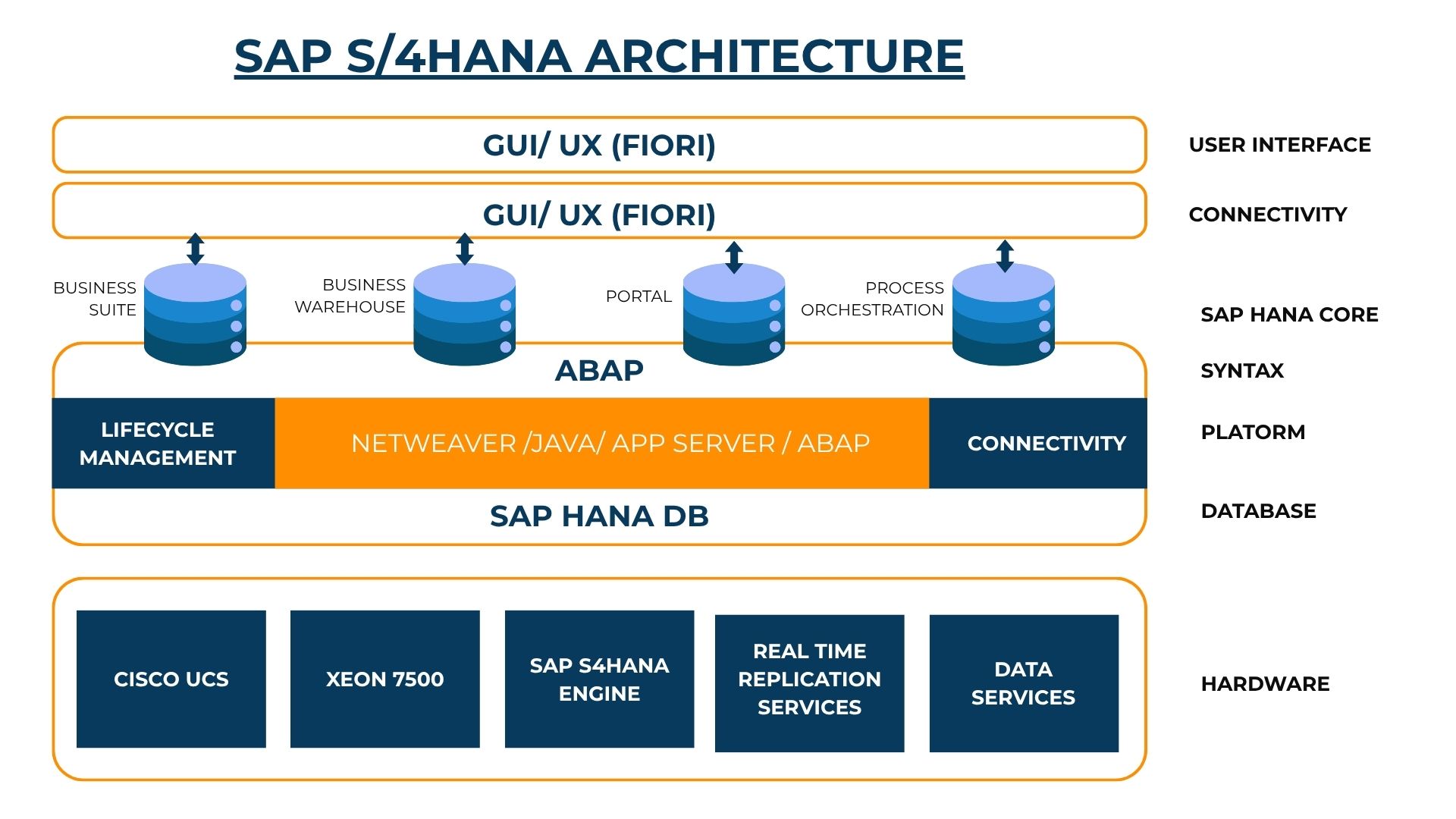
The core of SAP S/4HANA lies in its ability to simplify business processes. It integrates various modules – such as finance, supply chain management, and human resources – into a single, cohesive system. This integration reduces data redundancy and ensures consistency across the enterprise. Furthermore, S/4HANA boasts a modern, user-friendly interface called SAP Fiori, which enhances user experience through intuitive design and accessibility across devices. This modern UI is designed to provide a consistent and straightforward experience, making it easier for users to navigate and utilize the system effectively.
SAP S/4HANA is also designed with future-proofing in mind. Its architecture supports both on-premises and cloud deployments, offering flexibility to businesses of all sizes. Companies can choose a deployment model that aligns with their strategic goals, whether it’s leveraging the scalability of the cloud or maintaining control with an on-premises setup. Additionally, S/4HANA supports advanced technologies such as artificial intelligence (AI), machine learning, and the Internet of Things (IoT), paving the way for innovative applications and smarter business processes.
The Importance of Migration to SAP S/4HANA
Migrating to SAP S/4HANA is not just a technical upgrade; it’s a strategic move that can significantly impact an organization’s ability to compete in the digital age. As businesses seek to stay ahead of their competitors, the agility and efficiency provided by S/4HANA become critical. The suite’s advanced capabilities allow organizations to respond more quickly to market changes, streamline operations, and reduce the total cost of ownership through automation and enhanced processes.
Moreover, SAP has announced that it will end mainstream maintenance for its older ERP systems by 2027. This means that companies still using legacy systems will soon find themselves without support, leaving them vulnerable to security risks and operational inefficiencies. Migrating to S/4HANA not only ensures continued support but also provides access to regular updates and innovations from SAP, keeping the system aligned with the latest technological advancements.
Organizations that delay migration risk falling behind in the competitive landscape. The longer a company waits, the more complex and costly the migration process can become. Early adopters of S/4HANA are already reaping the benefits of improved performance, real-time analytics, and a more flexible IT environment. By making the move sooner rather than later, businesses can position themselves to take full advantage of these benefits, driving growth and innovation.
Key Benefits of SAP S/4HANA Migration
One of the most compelling advantages of migrating to SAP S/4HANA is the performance boost it offers. The in-memory computing capabilities of SAP HANA enable faster data processing, which translates to quicker transaction times and real-time analytics. This performance enhancement can lead to significant productivity gains, as employees spend less time waiting for data to load and more time focusing on value-added tasks.
Another key benefit is the improved user experience provided by SAP Fiori. The modern, intuitive interface simplifies navigation and reduces the learning curve for new users. This can lead to higher user adoption rates and greater satisfaction among employees. The responsive design of SAP Fiori also means that users can access the system from any device, whether it’s a desktop computer, tablet, or smartphone, providing greater flexibility in how and where work gets done.
SAP S/4HANA also enables better decision-making through advanced analytics and reporting capabilities. The suite’s real-time data processing allows organizations to generate insights on-the-fly, supporting more informed and timely decisions. Additionally, the integration of AI and machine learning technologies can provide predictive analytics and automation, helping businesses identify trends, forecast outcomes, and optimize operations. This level of insight and automation can give companies a competitive edge by enabling them to act proactively rather than reactively.
Assessing Your Current SAP Environment
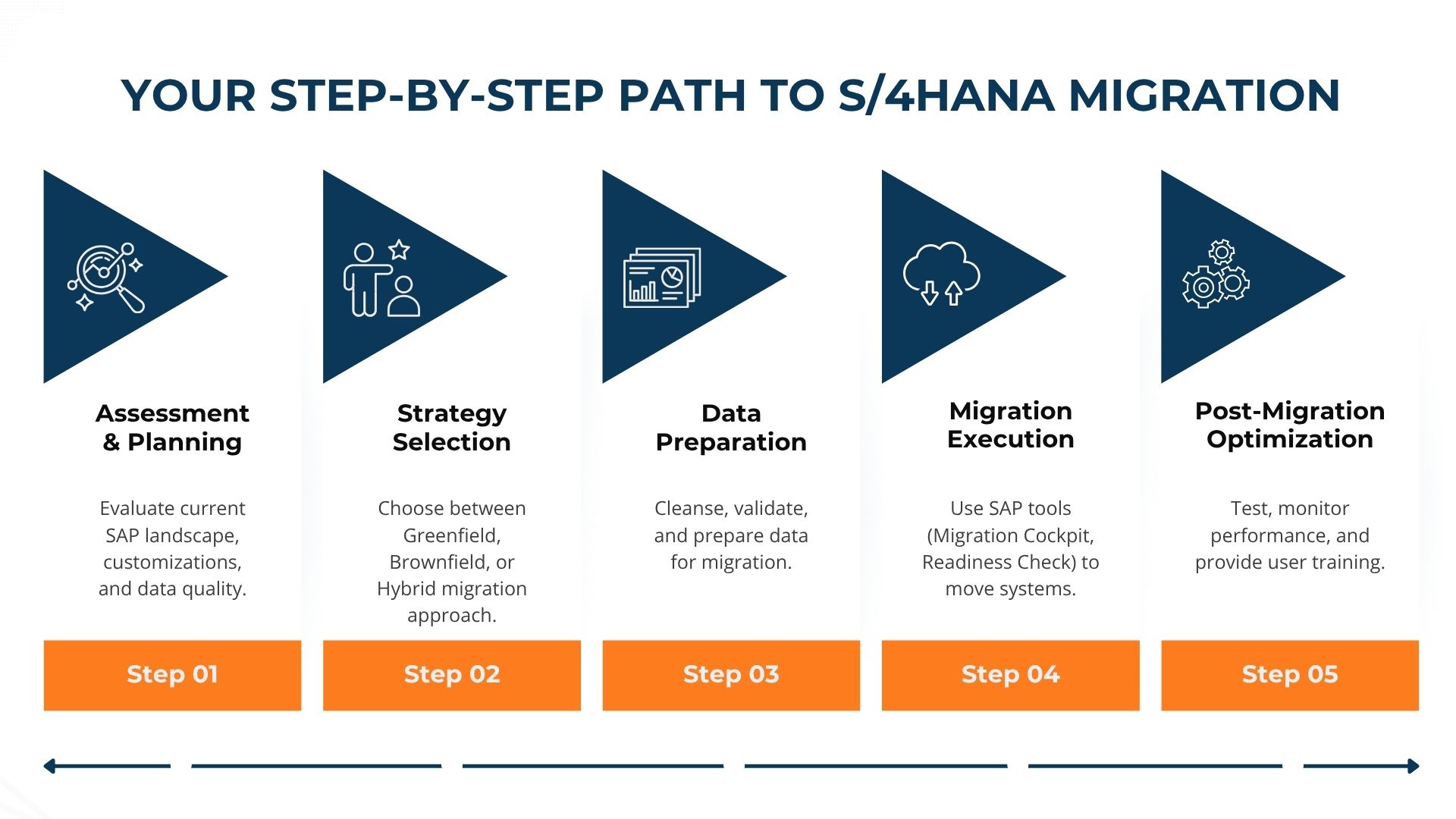
Before embarking on the migration journey, it’s essential to conduct a thorough assessment of your current SAP environment. This involves understanding the existing system landscape, identifying any customizations or third-party integrations, and evaluating the current state of data quality. A comprehensive assessment helps to identify potential pain points and areas that require special attention during the migration process.
Start by mapping out your existing SAP modules and their interdependencies. Document any custom code or modifications that have been implemented to meet specific business requirements. This step is crucial because customizations can complicate the migration process and may need to be re-evaluated or re-engineered in the new environment. Additionally, take stock of any third-party applications that interface with your SAP system, as these integrations will need to be tested and validated post-migration.
Data quality is another critical aspect to consider. Poor data quality can lead to inaccuracies and inefficiencies in the new system. Conduct a data audit to identify any inconsistencies, duplicates, or outdated information. Implement data cleansing processes to ensure that only high-quality data is migrated to the new system. This step not only enhances the accuracy of the migrated data but also improves the overall performance and reliability of the SAP S/4HANA environment.
Migration Strategies: Greenfield vs. Brownfield
When it comes to migrating to SAP S/4HANA, there are two primary strategies to consider: Greenfield and Brownfield. Each approach has its advantages and challenges, and the choice largely depends on the specific needs and circumstances of the organization.
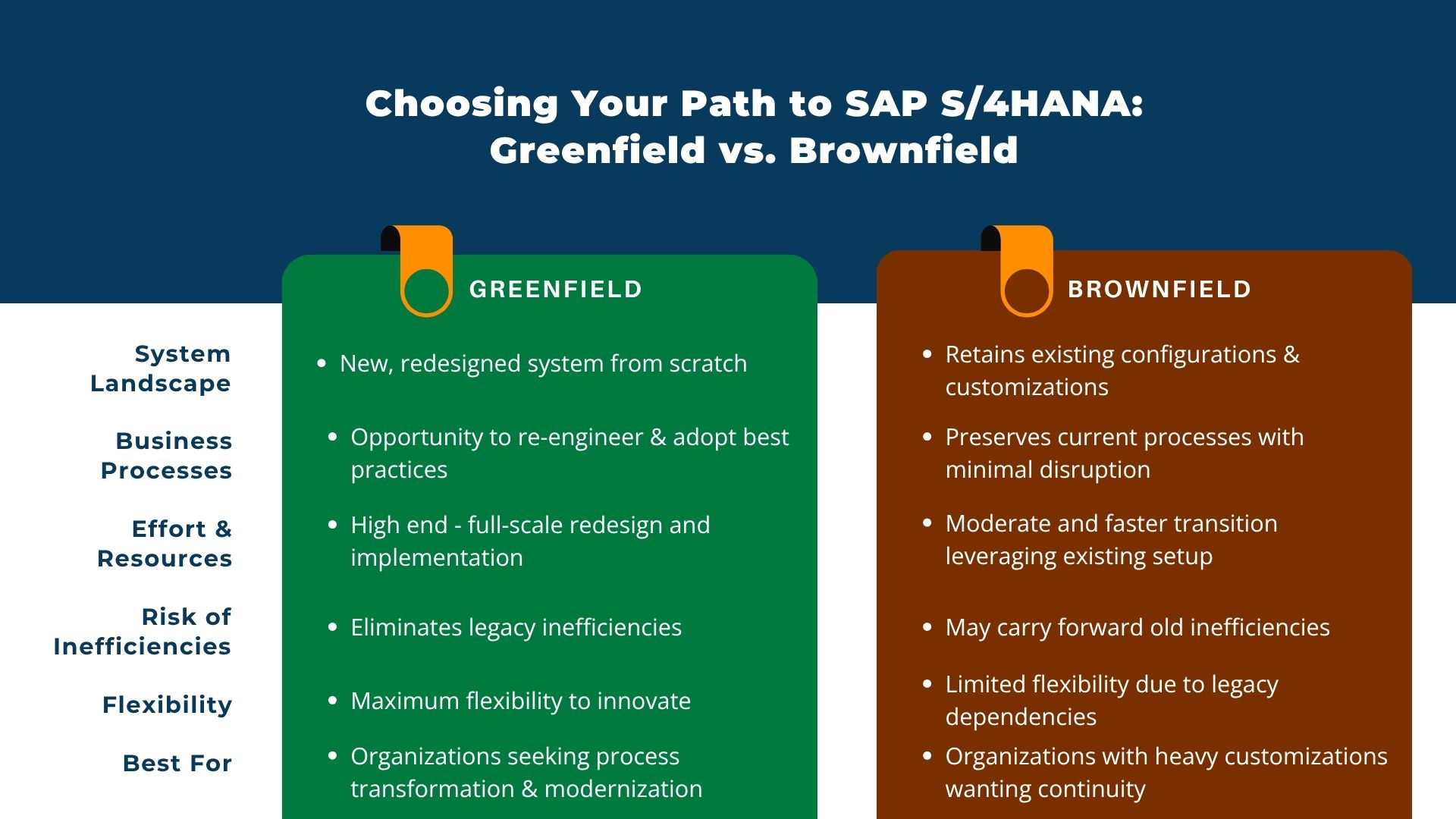
The Greenfield approach involves a complete re-implementation of the SAP system. This means starting from scratch and designing a new system landscape without carrying over any legacy configurations or customizations. The Greenfield strategy offers the opportunity to re-engineer business processes, implement best practices, and eliminate any inefficiencies present in the old system. However, it also requires significant time, effort, and resources, as it involves a full-scale redesign and implementation.
On the other hand, the Brownfield approach focuses on upgrading the existing SAP system to S/4HANA while retaining the current configurations and customizations. This method is generally faster and less disruptive, as it builds on the existing system landscape. The Brownfield strategy is ideal for organizations that have heavily customized their SAP environment and want to minimize the impact on ongoing operations. However, it may also carry over some of the inefficiencies and limitations of the old system, and careful planning is needed to ensure a smooth transition.
Preparing for Migration: Critical Steps to Take
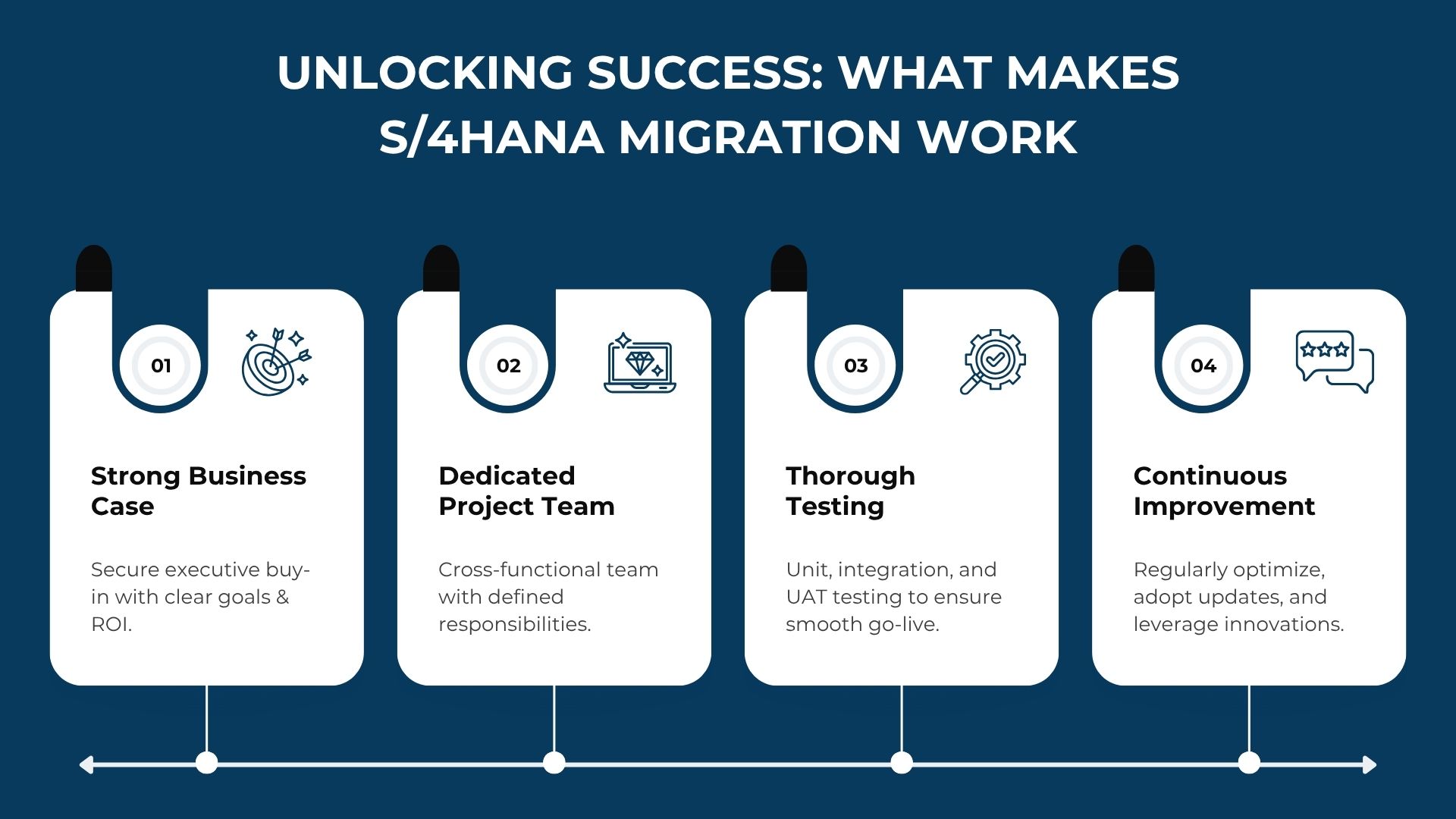
Effective preparation is key to a successful SAP S/4HANA migration. One of the first steps in the preparation phase is to establish a clear business case for the migration. This involves identifying the strategic goals and objectives that the migration aims to achieve, such as improved performance, enhanced user experience, and better decision-making capabilities. A well-defined business case helps to secure executive buy-in and ensures alignment across the organization.
Next, assemble a dedicated project team with representatives from various departments, including IT, finance, supply chain, and human resources. This cross-functional team will be responsible for overseeing the migration process, coordinating activities, and ensuring that all aspects of the project are addressed. Assigning clear roles and responsibilities within the team is crucial for maintaining accountability and driving progress.
Develop a detailed migration plan that outlines the key milestones, timelines, and dependencies. This plan should also include a risk management strategy to identify potential risks and define mitigation measures. Additionally, establish a communication plan to keep all stakeholders informed and engaged throughout the migration process. Regular updates and transparent communication help to manage expectations and address any concerns that may arise.
Best Practices for a Smooth Migration Process
Adhering to best practices can significantly enhance the success of your SAP S/4HANA migration. One of the most important best practices is to conduct thorough testing at each stage of the migration process. This includes unit testing, integration testing, and user acceptance testing. Comprehensive testing helps to identify and resolve any issues before they impact the live environment, ensuring a smoother transition.
Another best practice is to leverage SAP’s tools and resources, such as the Readiness Check and the S/4HANA Migration Cockpit. The Readiness Check provides a detailed analysis of your current system landscape, highlighting areas that need attention and offering recommendations for improvement. The S/4HANA Migration Cockpit simplifies the data migration process by providing pre-configured templates and automated data mapping capabilities.
It’s also essential to provide adequate training and support for end-users. A successful migration is not just about the technical aspects but also about ensuring that users are comfortable and proficient with the new system. Conduct training sessions and provide access to resources, such as user manuals and online tutorials, to help users get up to speed. Continuous support post-migration is also crucial to address any issues and ensure a smooth adoption.
Common Challenges and How to Overcome Them
Migrating to SAP S/4HANA can present several challenges, but with careful planning and execution, these challenges can be effectively managed. One common challenge is data migration. Transferring large volumes of data from legacy systems to S/4HANA can be complex and time-consuming. To overcome this challenge, start with a thorough data assessment and cleansing process. Use SAP’s data migration tools to streamline the transfer and validate the data to ensure accuracy and completeness.
Another challenge is managing customizations and integrations. Legacy systems often have extensive custom code and third-party integrations that may not be compatible with S/4HANA. To address this, conduct a detailed analysis of all customizations and integrations and determine which ones are essential. Where possible, replace custom code with standard S/4HANA functionality or re-engineer it to fit the new environment. Test all integrations thoroughly to ensure they work seamlessly with S/4HANA.
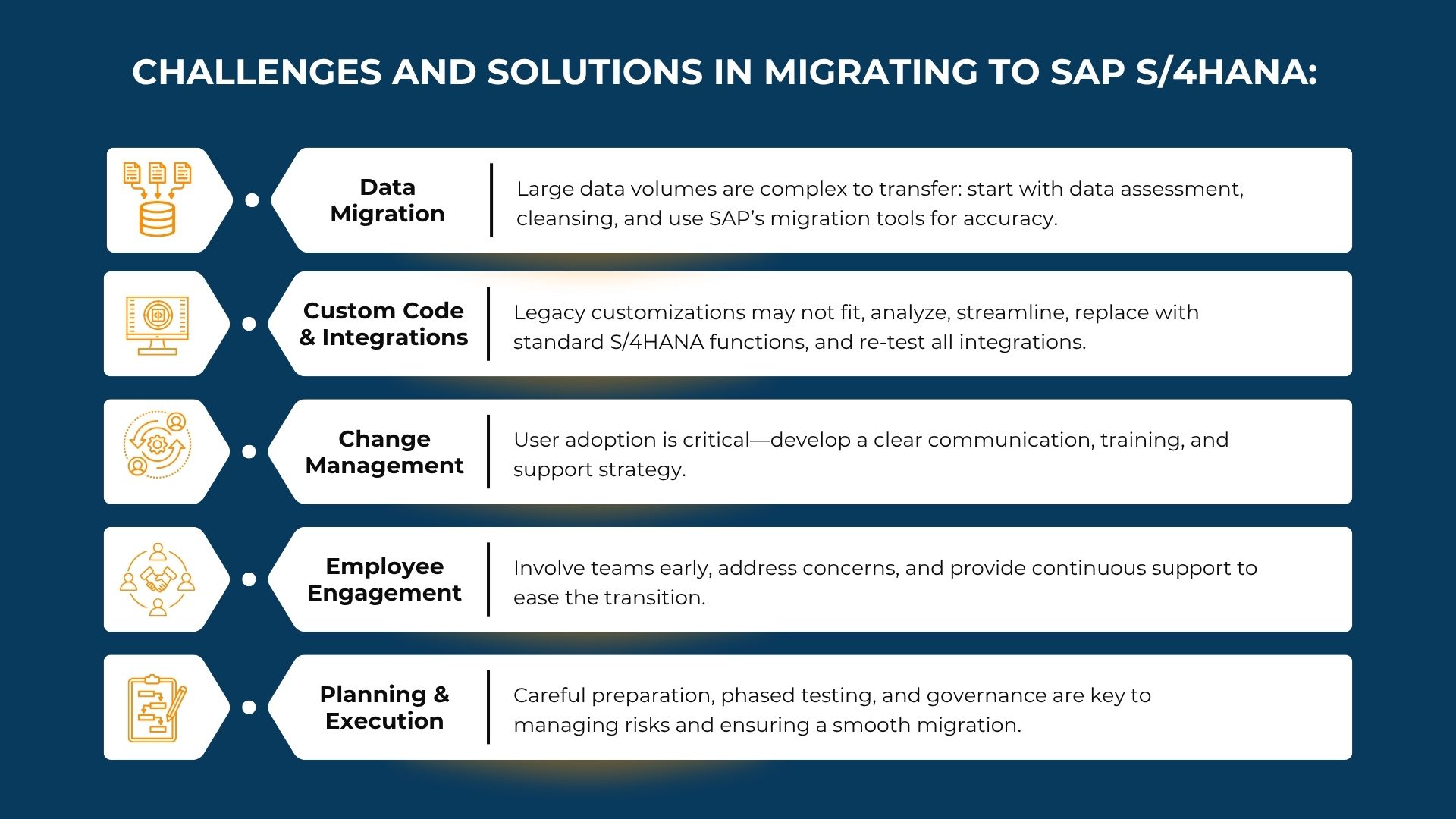
Change management is also a critical challenge. Migrating to a new ERP system requires a shift in how employees work and interact with the system. To manage this change, develop a comprehensive change management strategy that includes communication, training, and support. Engage with employees early in the process, address their concerns, and provide ongoing support to help them adapt to the new system. A positive change management approach can significantly enhance user adoption and satisfaction.
Post-Migration: Ensuring Long-Term Success
Once the migration to SAP S/4HANA is complete, it’s important to focus on ensuring long-term success. Start by conducting a post-migration review to evaluate the overall success of the project and identify any areas for improvement. Gather feedback from key stakeholders and end-users to understand their experiences and address any issues that may have arisen during the transition.
Ongoing monitoring and optimization are essential to maintain the performance and reliability of the S/4HANA system. Implement monitoring tools to track system performance, identify potential issues, and take proactive measures to resolve them. Regularly review and optimize business processes to ensure they are aligned with best practices and leverage the full capabilities of S/4HANA.
Continuous improvement should be a key focus post-migration. Stay updated with the latest innovations and updates from SAP, and explore new features and functionalities that can enhance your business operations. Encourage a culture of continuous learning and improvement within the organization, and provide opportunities for employees to develop their skills and knowledge. By fostering a proactive and forward-thinking approach, you can maximize the value of your SAP S/4HANA investment and drive long-term success.
Conclusion: Embracing the Future with SAP S/4HANA
Migrating to SAP S/4HANA is a transformative journey that can unlock significant benefits for your organization. By following a structured approach and leveraging best practices, you can navigate the complexities of the migration process and achieve a seamless transition. With its advanced capabilities, real-time analytics, and user-friendly interface, SAP S/4HANA positions your organization for future growth and efficiency in an increasingly competitive market.
Embrace the opportunities that SAP S/4HANA offers and take proactive steps to ensure a successful migration. Conduct a thorough assessment of your current environment, choose the right migration strategy, and prepare diligently for the transition. Focus on continuous improvement post-migration and stay updated with the latest innovations to maximize the value of your investment.

By unlocking the full potential of SAP S/4HANA, your organization can drive innovation, enhance decision-making, and achieve greater agility and efficiency. The journey may be challenging, but with the right approach and mindset, you can position your organization for long-term success and stay ahead in the digital age. Embrace the future with SAP S/4HANA and unlock the doors to new possibilities.