Skip to content Skip to footer

Treasury & Financial Asset Management

Modernize your treasury operations with Advanced SAP Treasury & Financial Asset Management consulting. From liquidity planning to IFRS compliance, our treasury experts deliver end-to-end cash, risk, and asset management solutions tailored to your enterprise needs. Implement and optimize your SAP TRM landscape.

Capabilities

Cash Management

Treasury & Risk Management

Financial Products Subledger

Bank Communication Management

Overview:
Cash management is at the heart of any organization’s treasury operations. It involves managing the inflows and outflows of cash to ensure liquidity, meet financial obligations, and maximize returns on surplus funds. Effective cash management helps companies optimize their working capital and make strategic decisions backed by accurate, real-time data.
 
Key Functions:
 
Cash Positioning and Forecasting: Enables treasurers to view consolidated cash positions across multiple bank accounts, entities, and currencies. Forecasting tools use historical and real-time data to project future cash needs, supporting investment and funding decisions.
 
Liquidity Management: Supports pooling, sweeping, and netting structures to ensure optimal allocation of liquidity across the enterprise.
 
Bank Account Management: Centralizes control over global bank accounts by maintaining account hierarchies, authorized signatories, and related documentation.
 
Cash Flow Optimization: Helps identify idle cash, reduce borrowing costs, and enhance returns on surplus liquidity.
 
Integration with ERP and Banking Systems: Streamlines cash flow monitoring by integrating with accounts payable, accounts receivable, and general ledger systems, as well as with external banking platforms for real-time updates. Automate receivables with SAP Cash Application.
 
Benefits:
Organizations gain improved cash visibility, reduced operational risks, better decision-making, and compliance with corporate governance standards. By automating routine cash processes, treasury teams can focus on strategy and performance improvement.
Overview:
Treasury and Risk Management (TRM) encompasses the strategies, processes, and technologies used to manage financial risk, ensure liquidity, and optimize capital structure. This capability provides the analytical and operational foundation for managing interest rate risk, foreign exchange exposure, commodity risk, and credit risk. You can also move to SAP TRM on S/4HANA with minimal disruption.
 
Key Functions:
 
Deal Capture and Management: Supports a wide range of financial instruments, including money market transactions, bonds, derivatives, and foreign exchange contracts.
 
Market Data Integration: Provides access to real-time and historical market data for pricing, valuation, and risk assessment.
 
Hedging and Exposure Management: Identifies and mitigates risks from currency, interest rate, or commodity fluctuations using hedge accounting tools that comply with IFRS and GAAP standards.
 
Valuation and Accounting: Automates fair value calculations, accrual postings, and accounting entries while ensuring compliance with regulatory standards such as IFRS 9 or ASC 815.
 
Credit and Counterparty Risk Monitoring: Tracks exposure limits and credit ratings, alerting treasury teams to potential default risks.
 
Scenario Analysis and Stress Testing: Models different economic conditions to evaluate their potential impact on liquidity, earnings, and capital adequacy.
 
Benefits:
By centralizing risk management, companies gain greater transparency into exposures and can take proactive measures to minimize financial losses. The result is improved compliance, more accurate financial reporting, and enhanced strategic planning for funding and investment decisions.
 
FAQ
1. What does an SAP TRM S/4 migration involve?
A. An SAP TRM S/4HANA migration involves assessing your current Treasury & Risk Management processes, mapping them to the S/4HANA TRM architecture, and redesigning workflows to leverage embedded analytics, automation, and simplified data models. The migration typically includes converting master data, updating financial instruments, aligning hedge management and risk settings, testing end-to-end treasury flows, and validating compliance with accounting and valuation principles. As part of the transition, organizations gain real-time liquidity visibility on SAP HANA Cloud, enabling faster decision-making and improved cash forecasting. A successful migration also ensures seamless SAP TRM integration across finance systems, connecting cash, payments, banking, portfolios, and risk modules into one unified digital core for Treasury on S/4HANA.
Overview:
The Financial Products Subledger (FPSL) is a specialized accounting engine designed to handle the complex financial transactions generated by treasury operations, loans, deposits, and derivatives. It acts as an intermediary between operational systems and the general ledger, ensuring consistent and compliant accounting treatment across diverse financial instruments.
 
Key Functions:
 
Unified Accounting Platform: Consolidates accounting for all financial products, providing a single source of truth for reporting and reconciliation.
 
Multi-GAAP and Multi-Currency Support: Simultaneously supports different accounting standards and currencies, enabling multinational organizations to meet both local and group-level reporting requirements.
 
Event-Based Accounting: Automates postings based on transaction lifecycle events, such as trade execution, interest accrual, maturity, or settlement.
 
Subledger-to-Ledger Integration: Ensures seamless data flow between subledger entries and the general ledger, maintaining auditability and traceability.
 
Performance and Profitability Analysis: Provides granular financial insights into product performance, helping management evaluate profitability by product, customer, or region.
 
Benefits:
The FPSL improves efficiency, accuracy, and transparency in financial reporting. It simplifies reconciliation, accelerates closing cycles, and supports audit readiness by maintaining detailed documentation of accounting processes and entries.
Overview:
SAP Bank Communication Management (BCM) is the centralized hub for managing secure electronic communication between an organization and its financial institutions. It ensures the safe exchange of payment instructions, bank statements, and other financial messages using standardized formats and secure channels.
 
Key Functions:
 
Payment Processing and Approval Workflows: Enables the creation, validation, approval, and transmission of payments in multiple formats, including SWIFT, ISO 20022, and host-to-host connections.
 
Bank Statement Reconciliation: Automates the retrieval and processing of bank statements, linking them directly to corresponding transactions in the cash or general ledger systems.
 
Connectivity Management: Manages connections with multiple banks, supporting both direct integrations and third-party connectivity providers.
 
Security and Compliance: Ensures that all communications are encrypted, authenticated, and traceable, aligning with global standards like SWIFT Customer Security Programme (CSP).
 
Exception Handling and Monitoring: Provides real-time dashboards for tracking message status, error resolution, and payment processing metrics.
 
Benefits:
BCM enhances operational efficiency by eliminating manual payment processes and reducing the risk of fraud or errors. It provides full visibility over banking transactions and improves auditability, while also reducing the cost and complexity of managing multiple bank relationships.

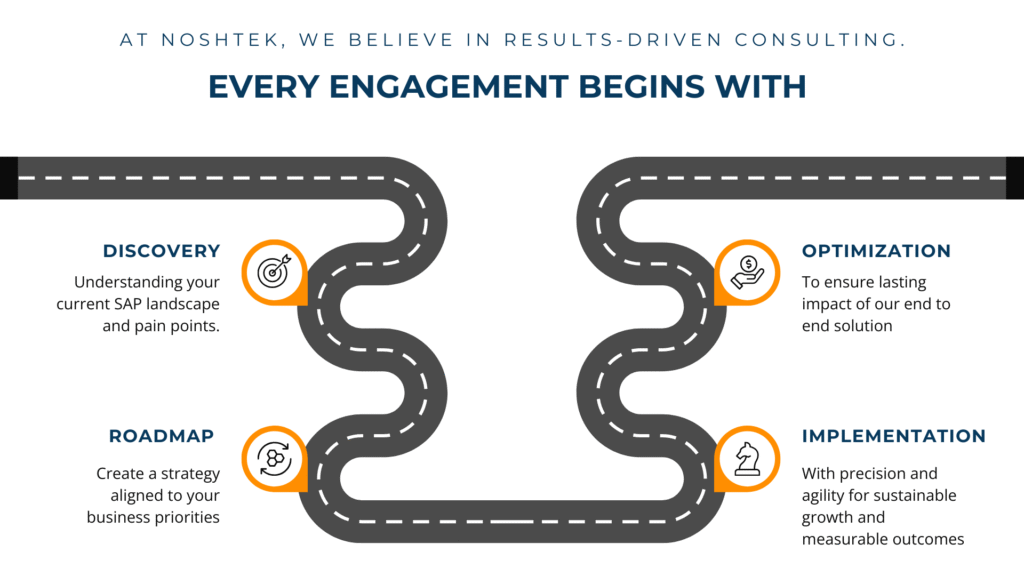
Our Approach

Noshtek North American Expert SAP Consultants for Financial Transformation

Why Noshtek?

Expertise

Boutique consulting with 20+ years of SAP finance expertise

Niche Expert

FS-CD, FI-CA, FPSL, PaPM, TRM specialists

Proven Track Record

Success in Insurance, Utilities, and Telecom Industries

Modern finance organizations rely on an integrated set of treasury and risk management tools to gain visibility, control, and efficiency across their cash, liquidity, and financial risk processes. Together, these four capabilities – Cash Management, Treasury & Risk Management, Financial Products Subledger, and Bank Communication Management, form the backbone of a modern, integrated treasury ecosystem. They enable finance teams to gain real-time insight into liquidity positions, manage risks effectively, streamline communication with banks, and ensure accurate financial reporting. By leveraging automation, integration, and compliance-driven processes, organizations can strengthen their financial resilience and position themselves for sustainable growth in a rapidly evolving global market.

Name

Lets Grow Together.

Whether you have questions about our services, need support, or want to share your feedback, our dedicated team is here to assist you.

SAP-Certified Experts

100+ Years of Collective SAP Experience 
Proven Results in Utilities, Telecom & Insurance

Follow Us